Leaving a Legacy

By Angelina Katsanis

The marine life of the Galápagos islands are under constant threat; threat by human captures, threat by invasive species, threat by microplastics and pollution. This late into the climate crisis, it is up to the next generation to learn from the previous generations’ mistakes and fix the problems left in the wake of decades of plastic abuse and environmental destruction on the marine animals of the Galápagos.

Juan Pablo Muñoz and Daniela Alarcón are two married marine biologists on San Cristóbal island committed to just that. Much of their research involves on-the-ground health assessments of animals, including tagging turtles, testing for micro plastics in blood samples, and tracking previously-tagged turtles.
And students are always involved in this work.

“I love working with the students,” Juan Pablo said. “This is the entire world’s problem, and the more young people to see with their own eyes the problems here, the better chance we have of fixing them.” Through their own work and the knowledge they pass on to students and their 5-year old daughter Brisa, they work every day to make both the Galápagos and the greater Earth a more sustainable home for the future of animals and humans alike.
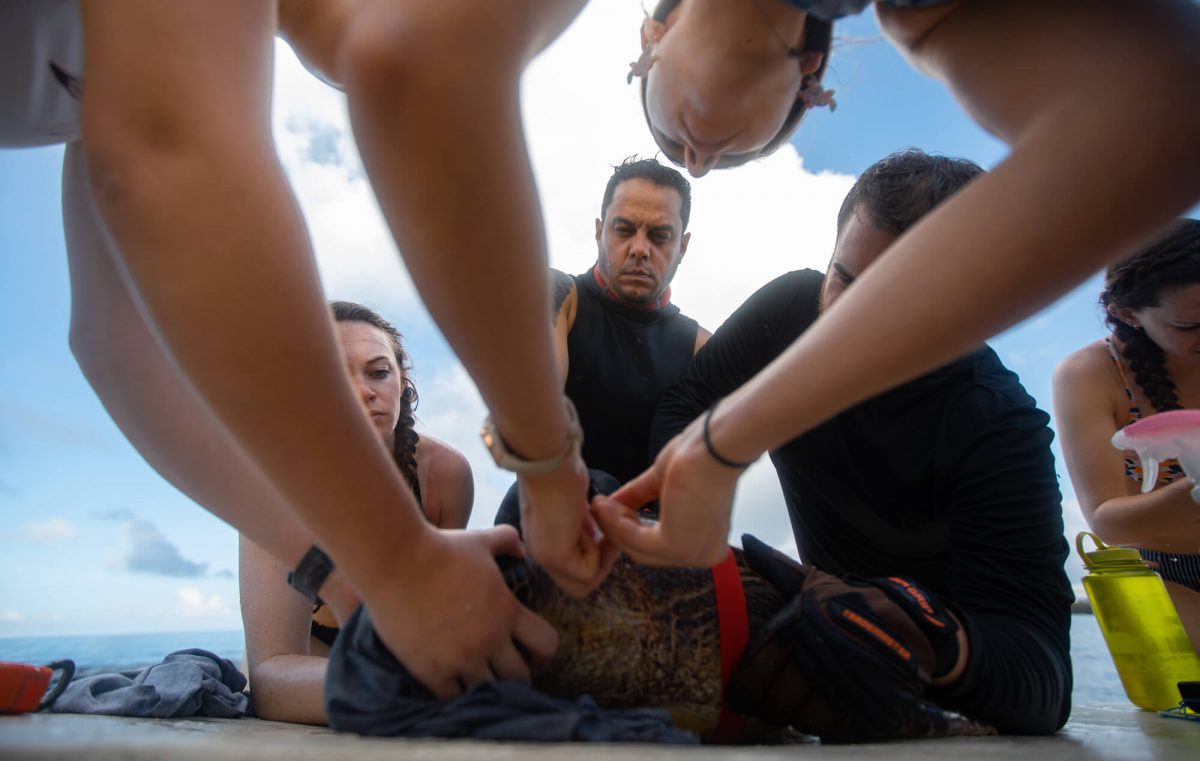
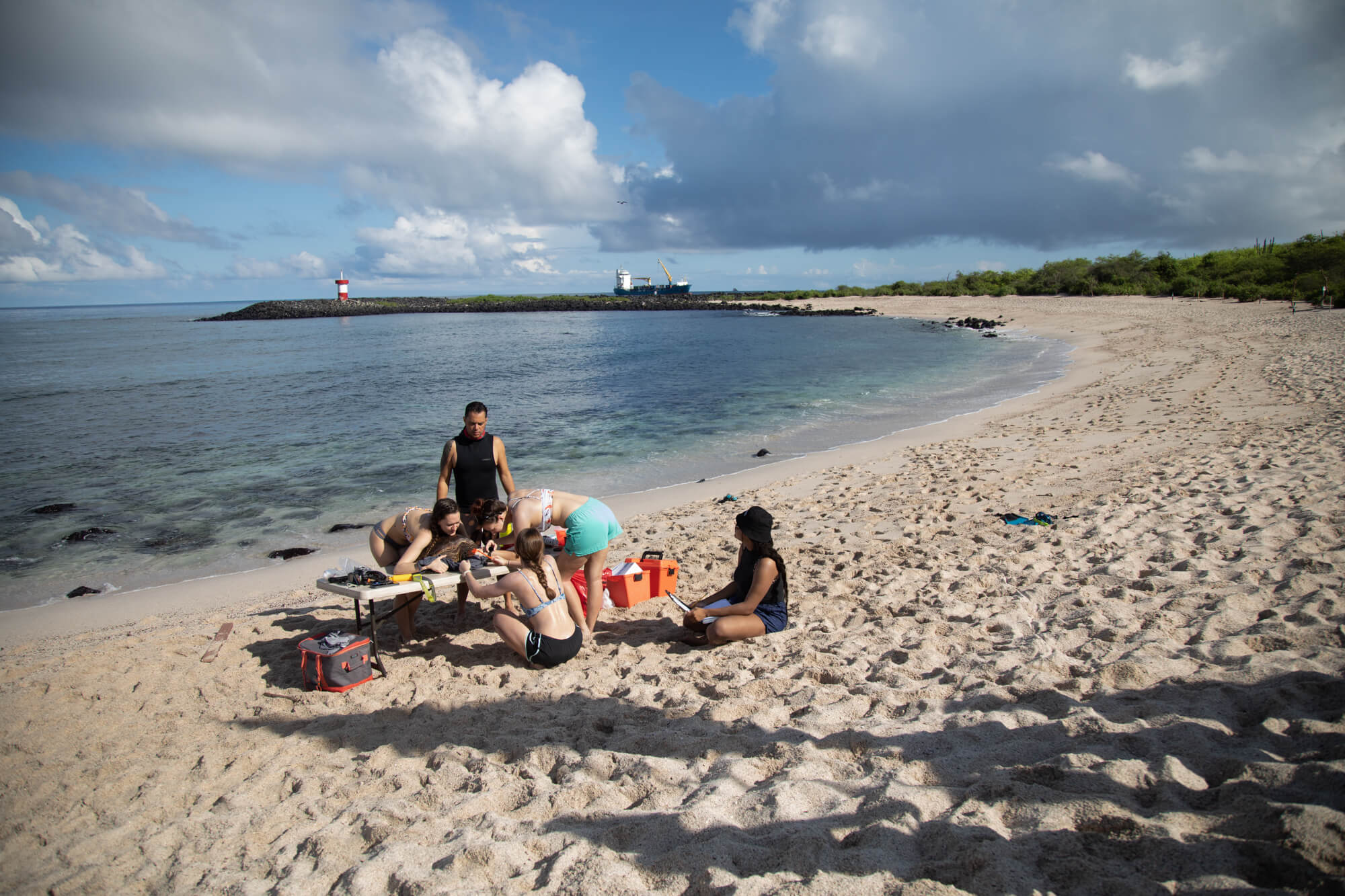
A team of students from N.C. State came for a week in March to assist Juan Pablo and Daniela with their work. “I love working with the students,” Juan Pablo said. “This is the entire world’s problem, and the more young people come to see with their own eyes the problems here, the better chances we have of fixing them.”

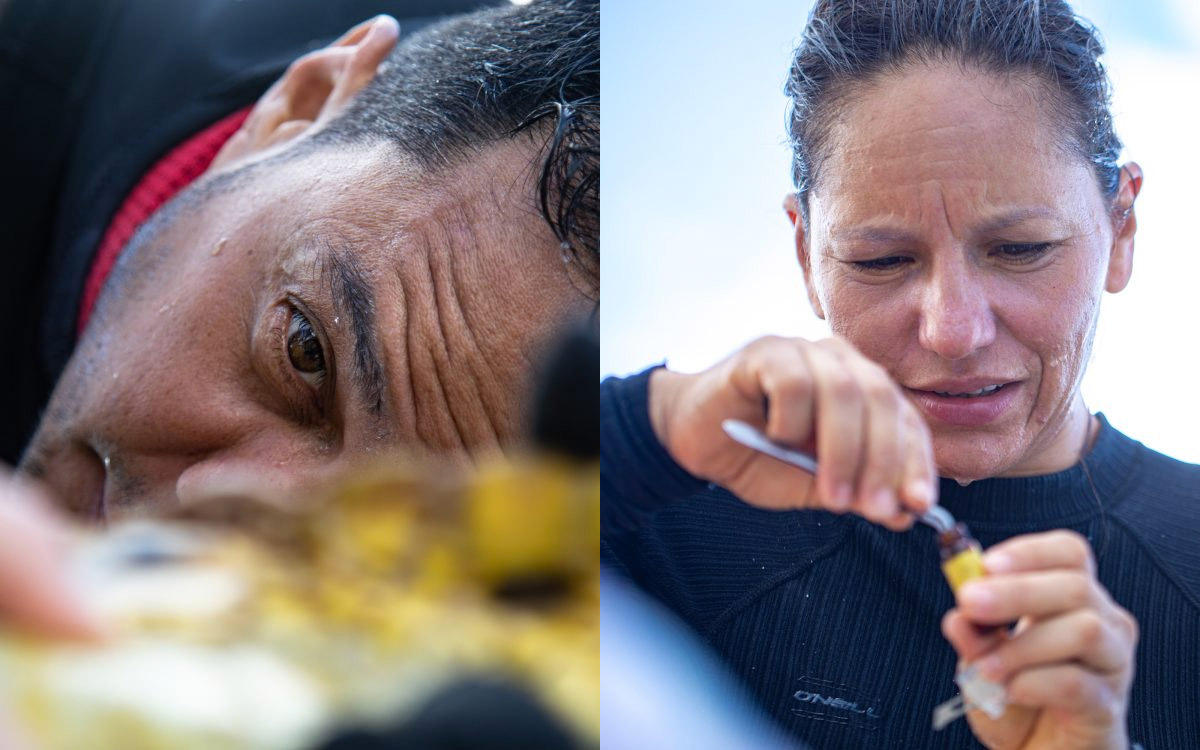
Juan Pablo takes delicate care in tagging the fin of one of the turtles, while Daniela deposits skin samples into a test tube. Together, the two have tagged and collected data for over 800 sea turtles in the archipelago, and every new sample helps further build the team’s knowledge on the species. The blood samples will be researched to discover different blood types of the turtles and how transfusion can be possible, while other samples and measurements help track the overall health of the turtles.

The team works on taking measurements after Juan Pablo has stepped back. This is their fifth turtle of the day and he is hoping they have learned enough to carry out the experiments on their own.
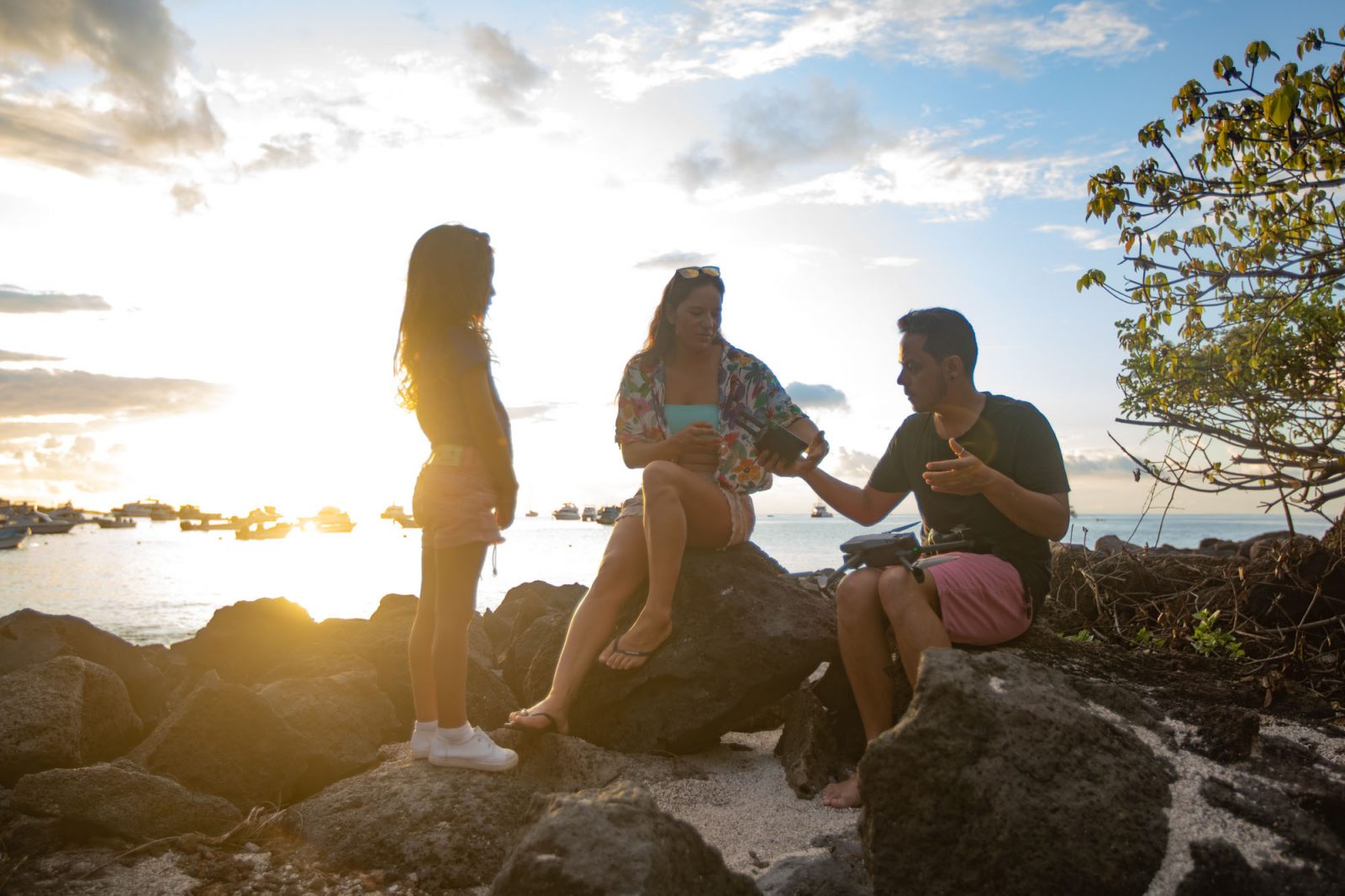
The family congregates in an alcove near the water to capture drone images of the island at sunset on March 13, 2022. They both use the drone in their research, primarily for spotting whales and conducting image analysis technology to extract data about the whales and calculate their sizes.

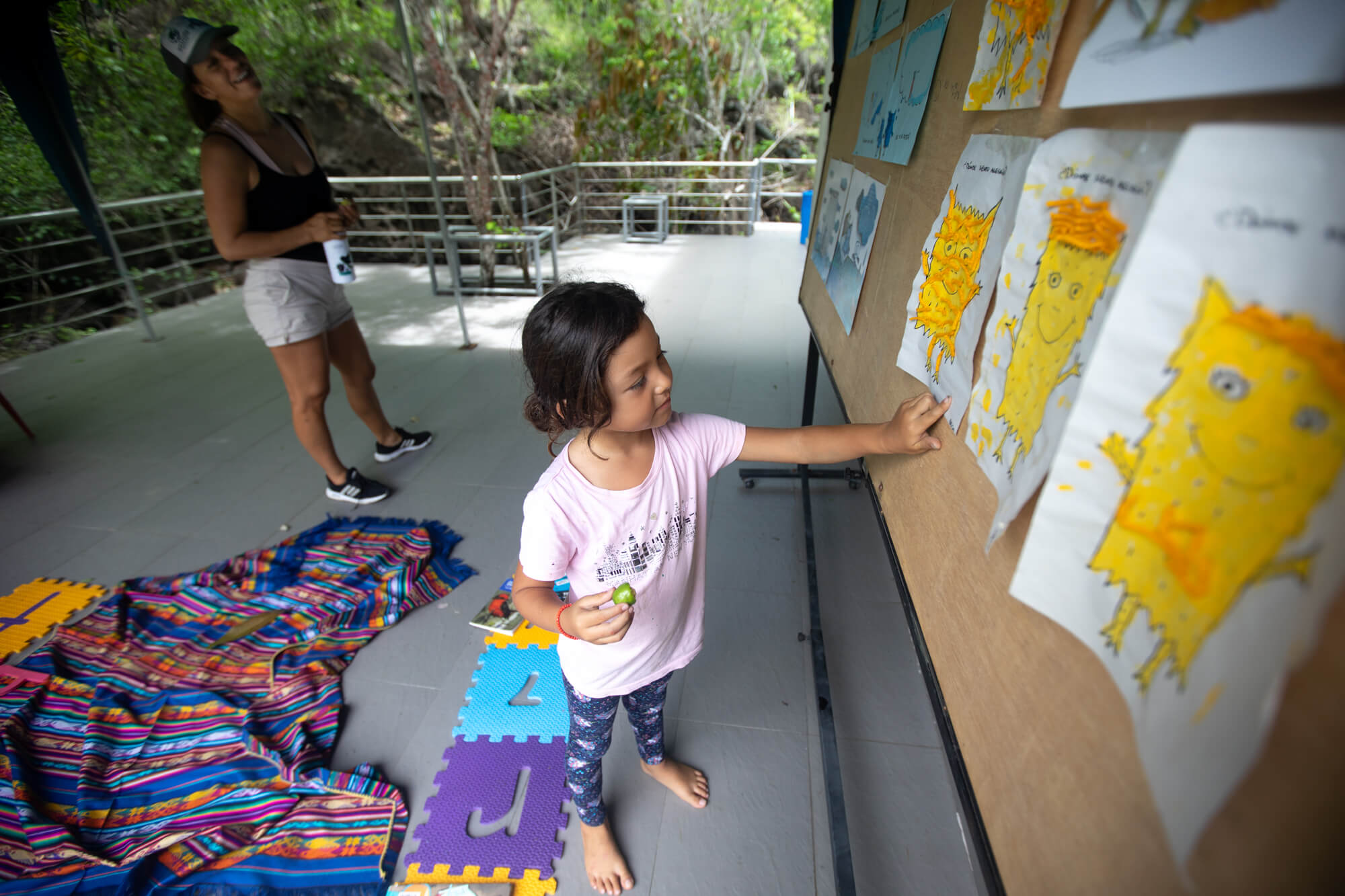
Brisa proudly shows her mother her art work from the day, pointing to a paper that says, “¿Dónde me siento?” Or, “Where do I feel?” Unlike the other students, Brisa says she feels “everywhere.”

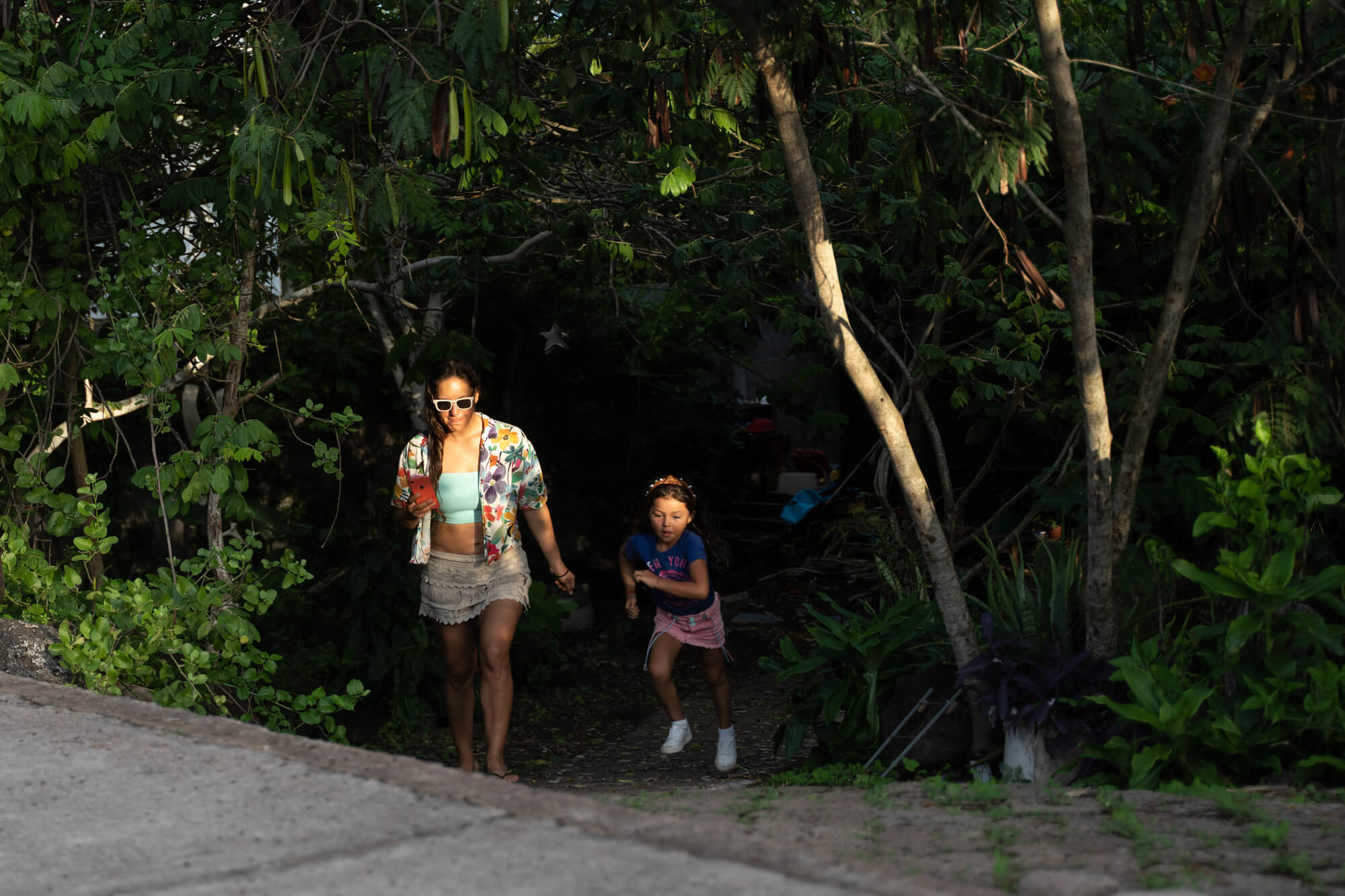
Daniela and Brisa emerge from the arbor of trees that shelter their home. Being ecologists and environmentalists, the couple wanted to live in and rebuild a sustainable home that respects the land rather than takes from it.
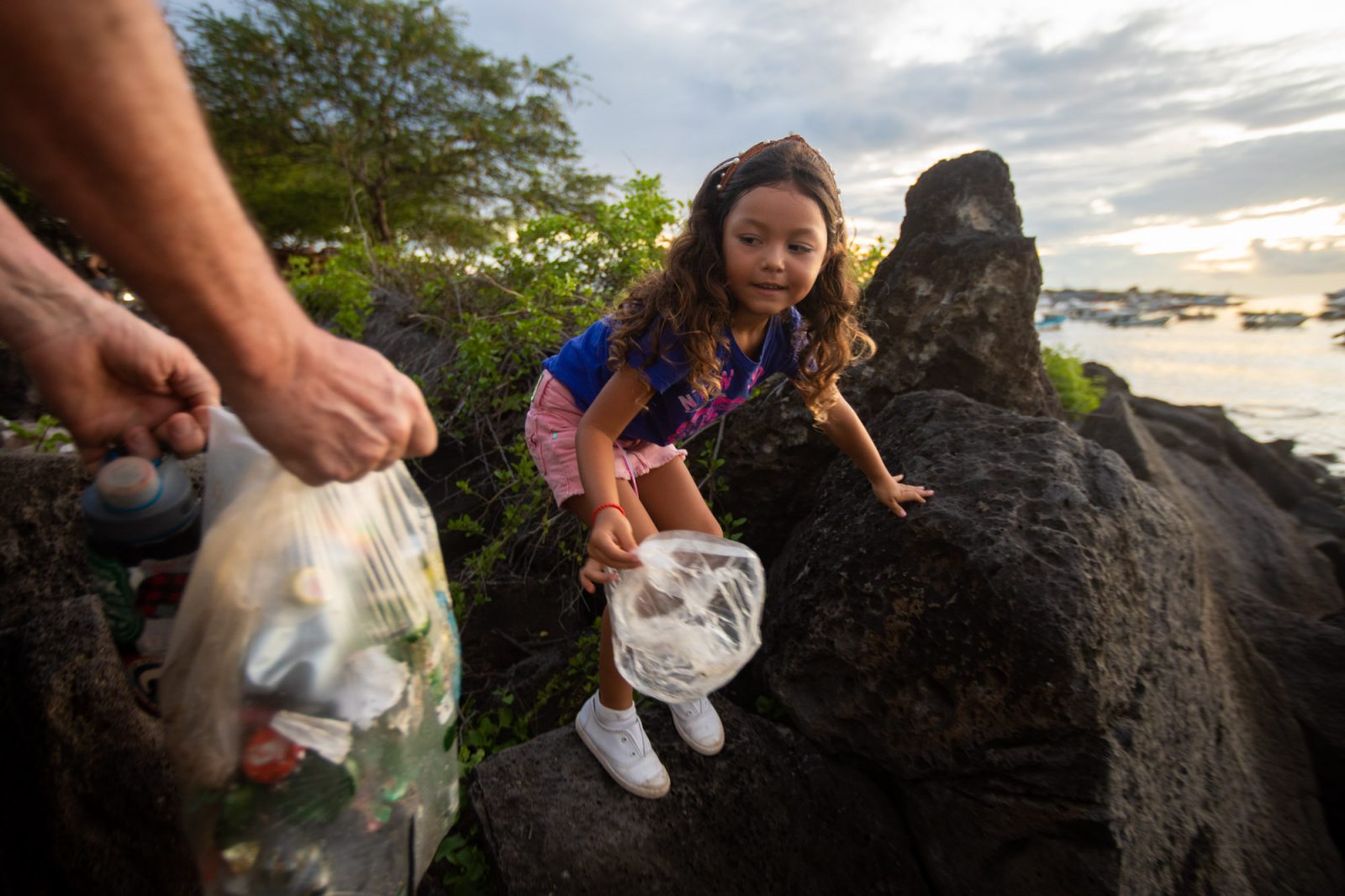
Everywhere the family goes, Brisa has her parents wait for her to pick up all the trash in the are before continuing on. “She’s a great kid. We don’t even tell her to do this,” Daniela said.

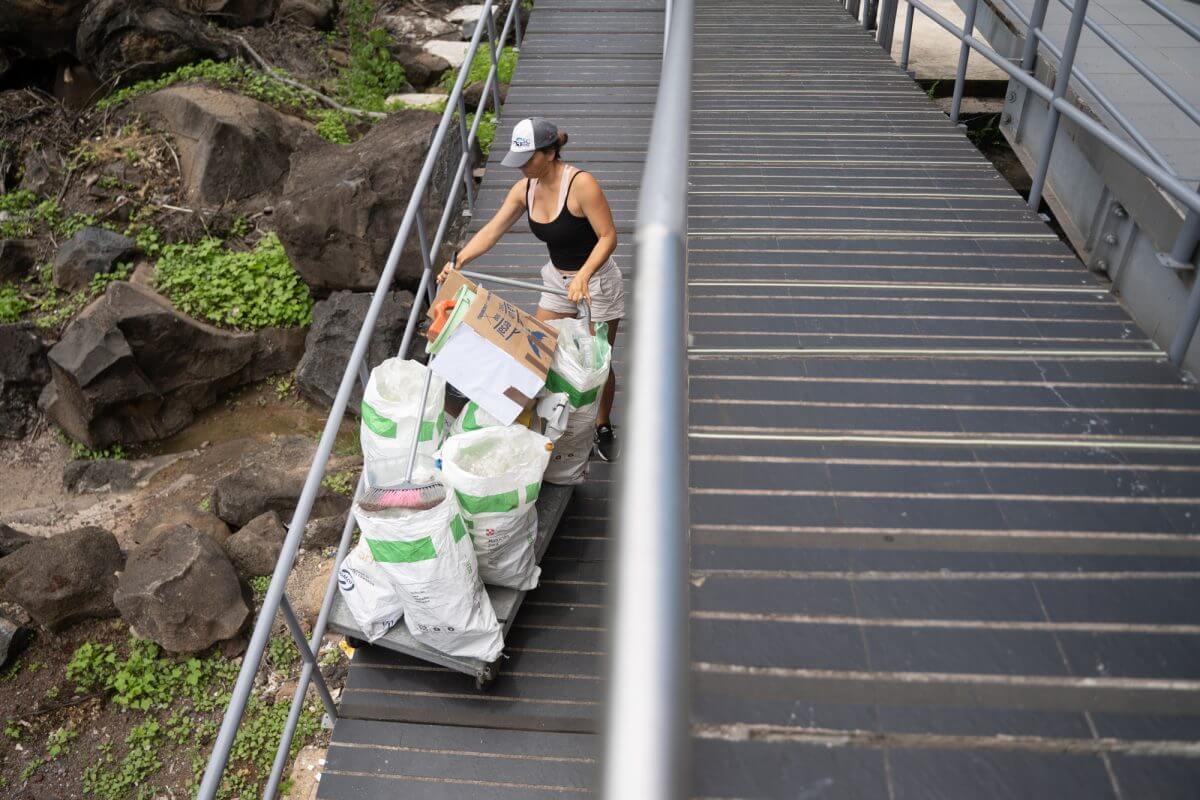
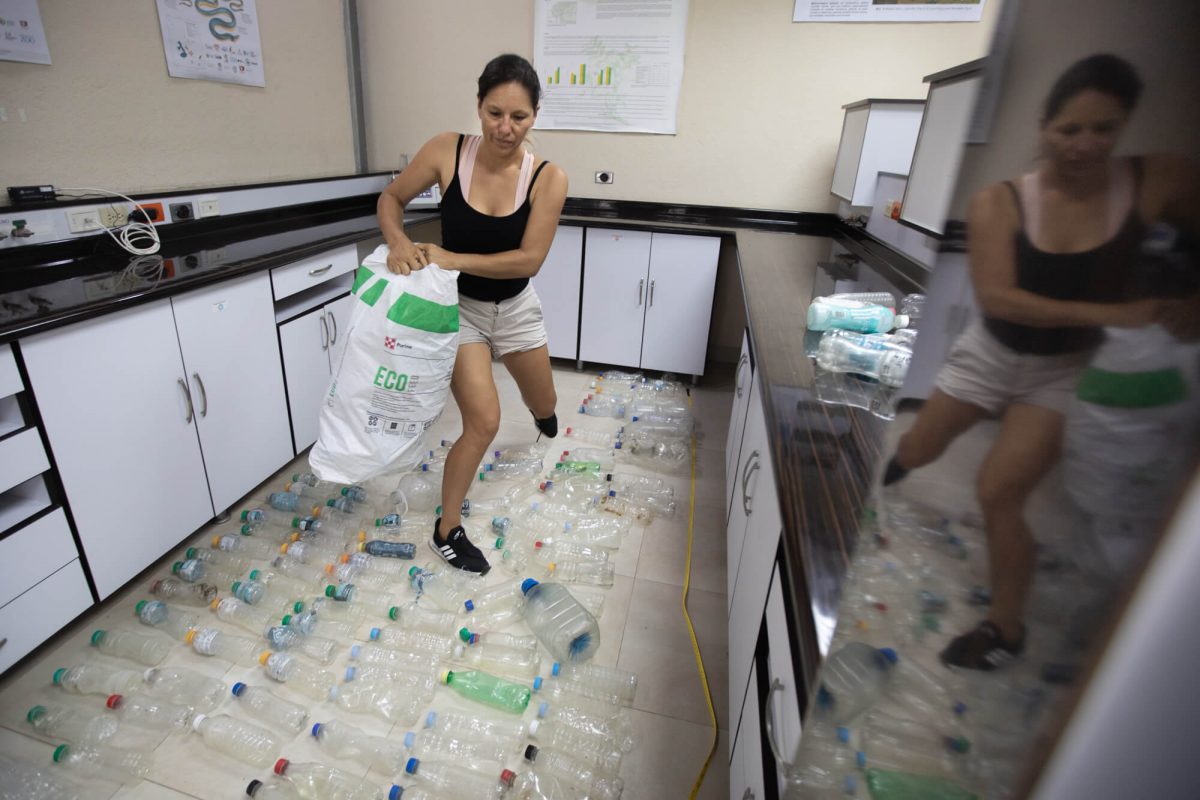
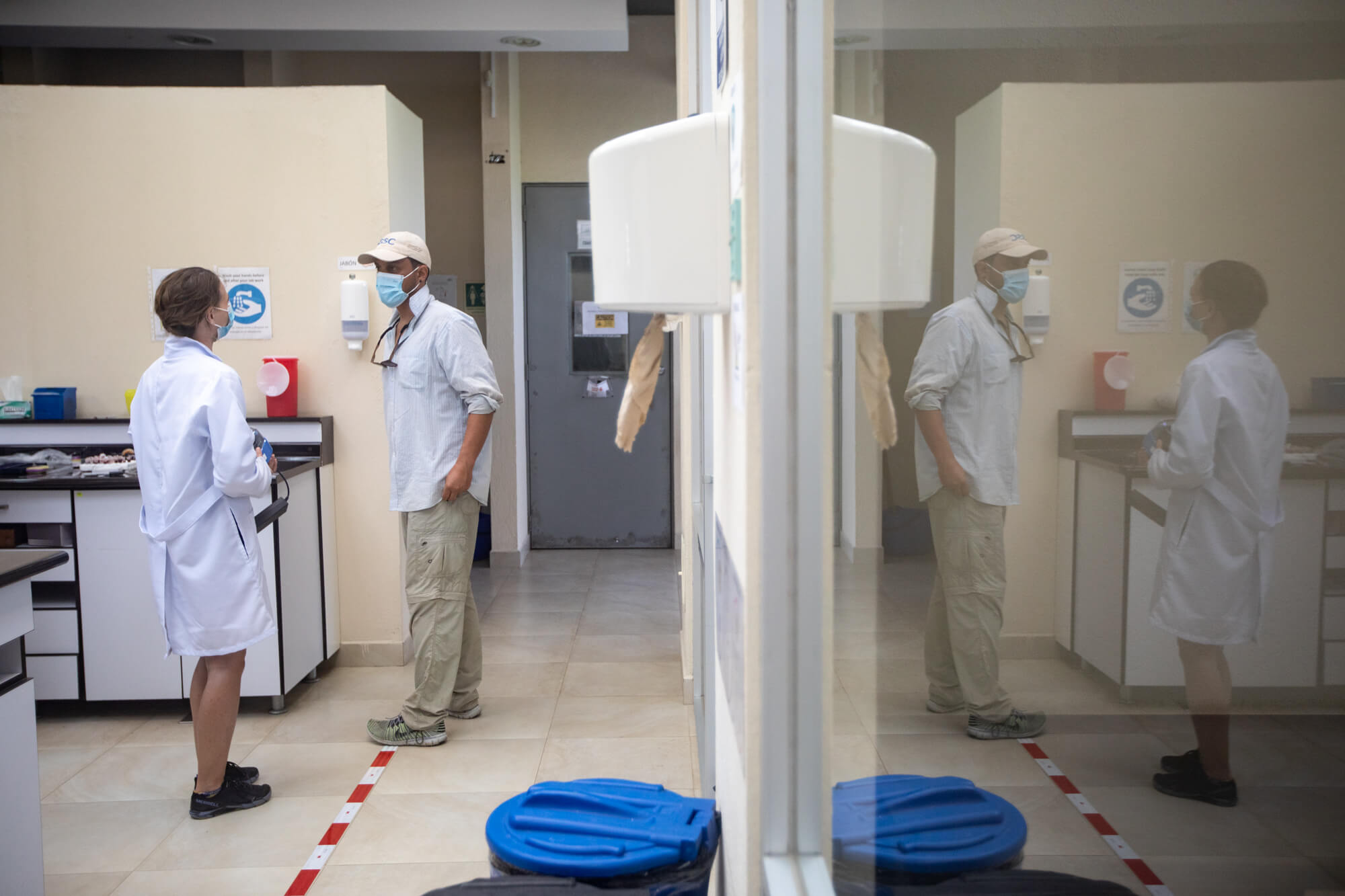
Daniela brings in the previous day's haul of plastic pollution into the Galapagos Science Center. As part of Juan Pablo’s thesis, he and Daniela, often accompanied by students, do routine beach clean-ups and take all the contents they collect to the labs to log them and piece together an understanding of where the plastic comes from.

All of the plastics from this day came from a small, 30-minute clean-up session in a 50-yard span of the remote beach Puerto Tablas. Many of the bottles weren’t local, but instead washed up from countries as far away as Japan. “People don’t understand that this is the entire world’s problem. Even if we have zero waste on the Galápagos, the ocean knows no borders and other countries’ litter will wash up on our shores,” Daniela explains.

After a long day in the field chasing turtles, the day is still not over. Juan Pablo instructs a student on what to do next with the blood samples they collected.
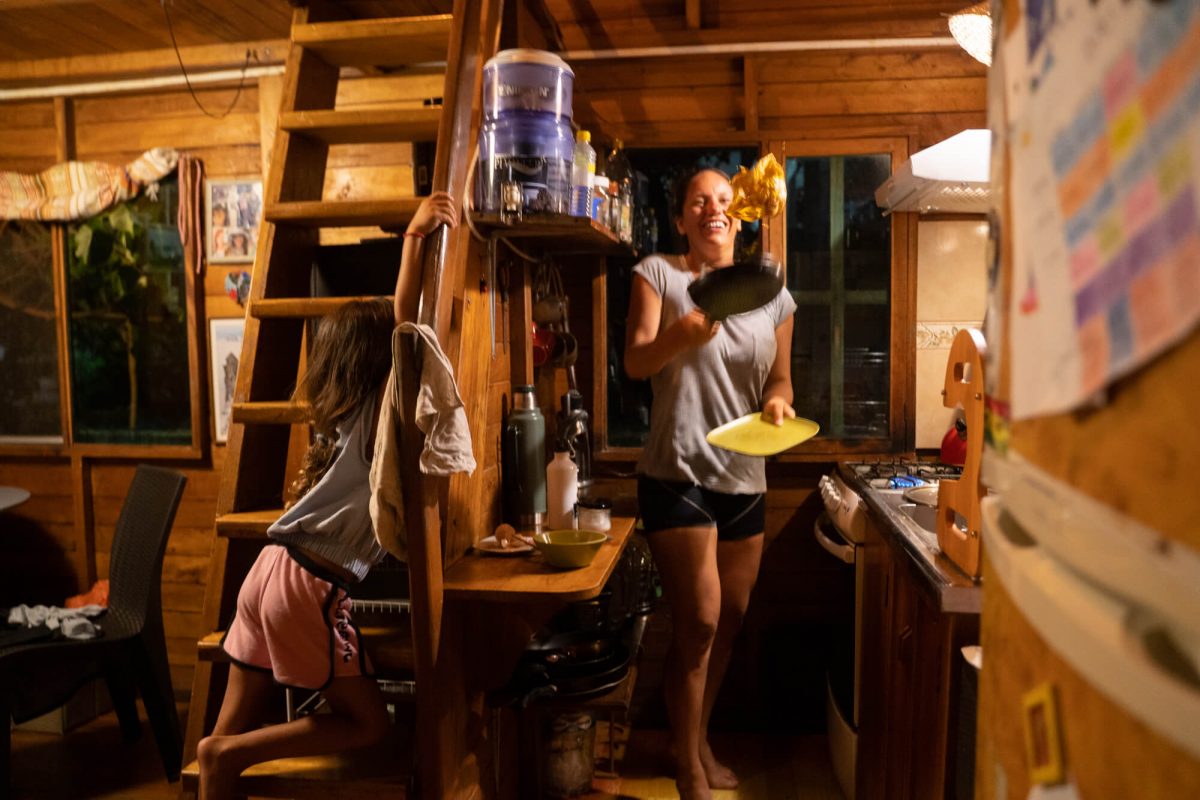
Daniela flips an omelet in the air for a hungry Brisa in their home on March 16, 2022. Home life and work life has always been a delicate balance for the family. “It’s not easy,” Dani said, “Being a mother. Being a woman in science. I’m always running around.”

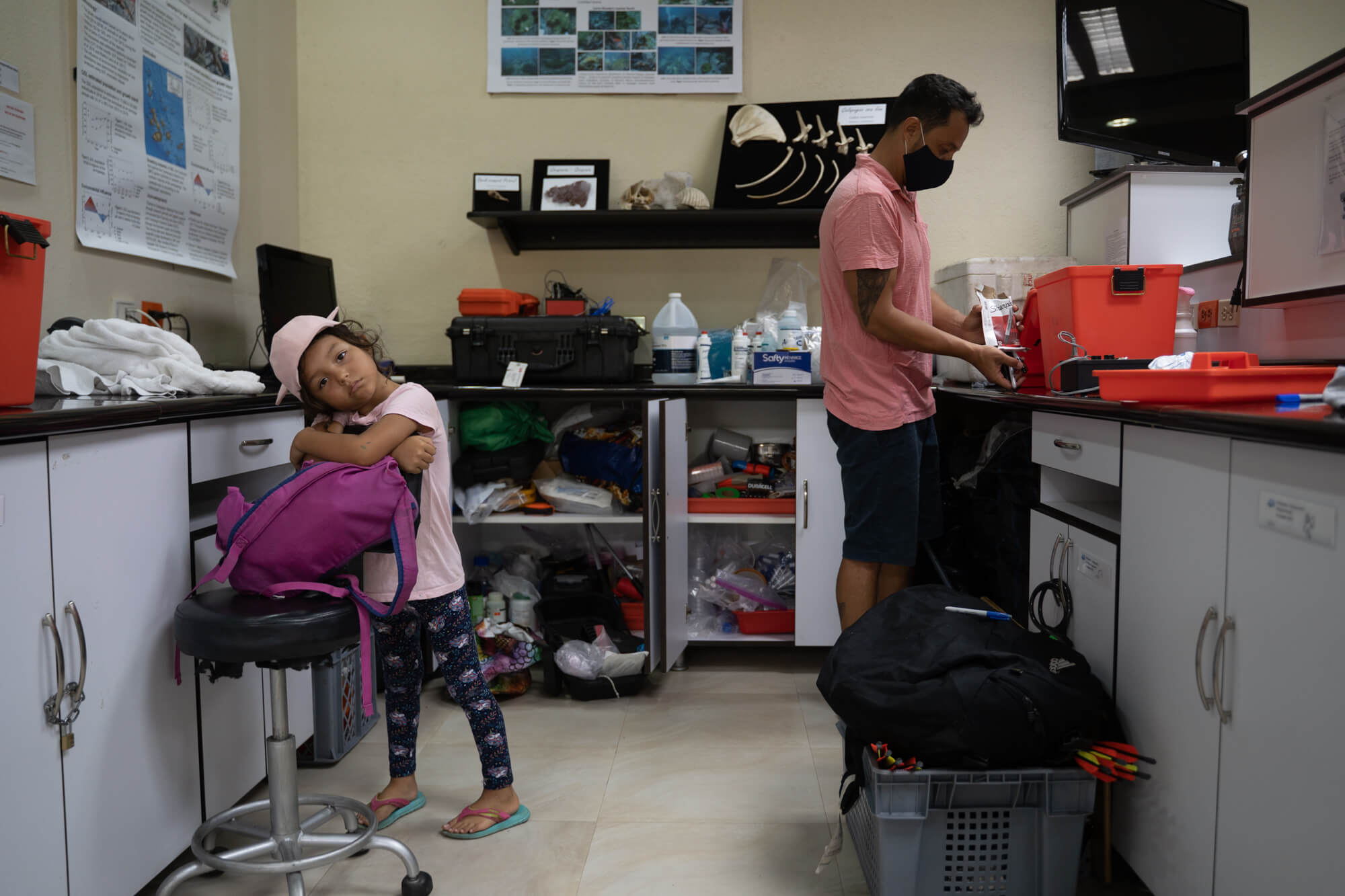
Being the daughter of two scientists is no easy job, and Brisa ends up spending a lot of time at the lab herself after school as her parents finish up their long days.

Daniela flips an omelet in the air for a hungry Brisa in their home on March 16, 2022. Home life and work life has always been a delicate balance for the family. “It’s not easy,” Dani said, “Being a mother. Being a woman in science. I’m always running around.”

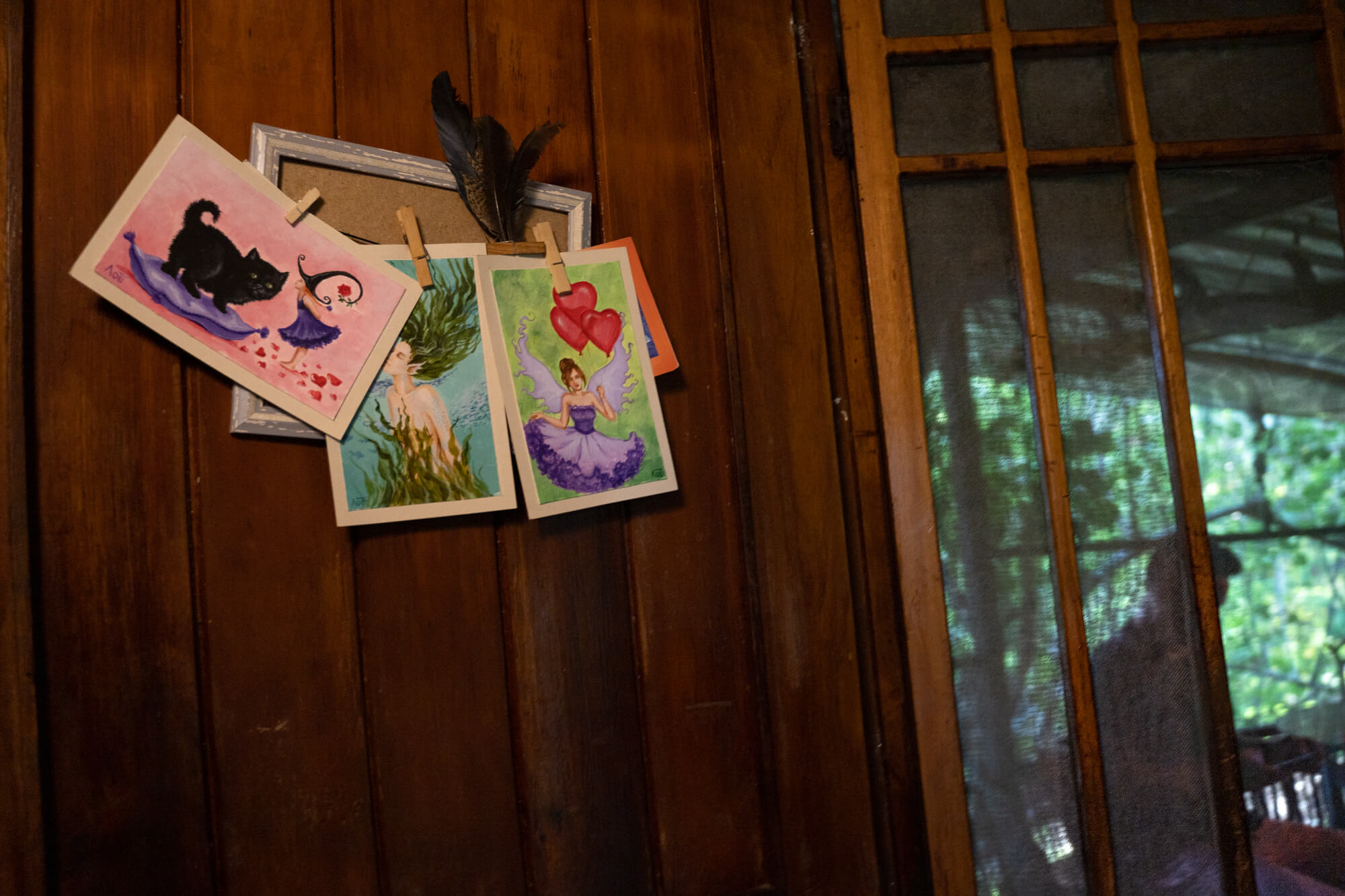
Miniature watercolor paintings hang at the entrance to the family’s home. Daniela’s father, Diego Alarcón, painted most of the artwork on display in the house.

One of the two research boats headed to Puerto Tablas for another field day on March 15, 2022.
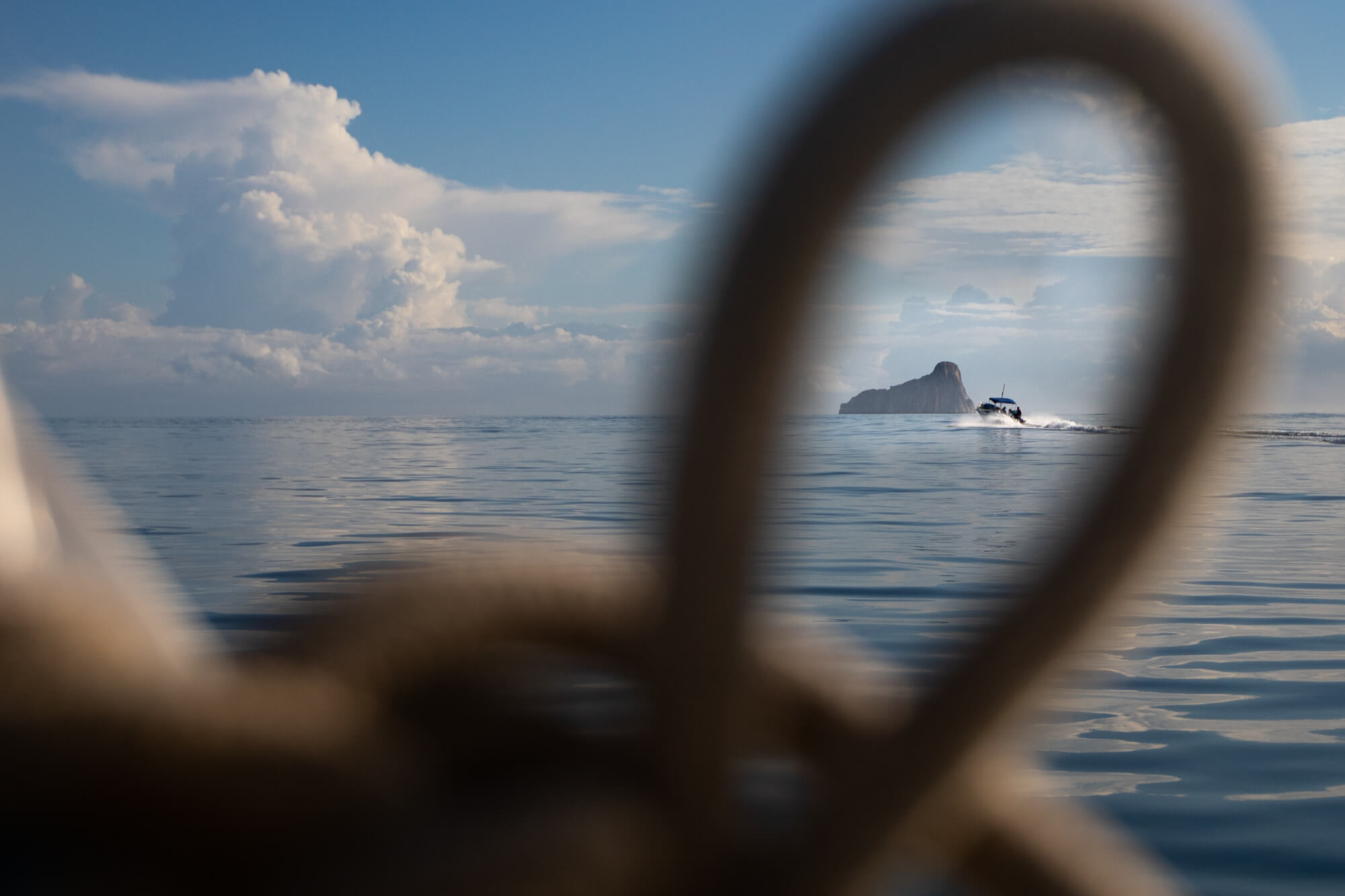
One of the two research boats headed to Puerto Tablas for another field day on March 15, 2022.
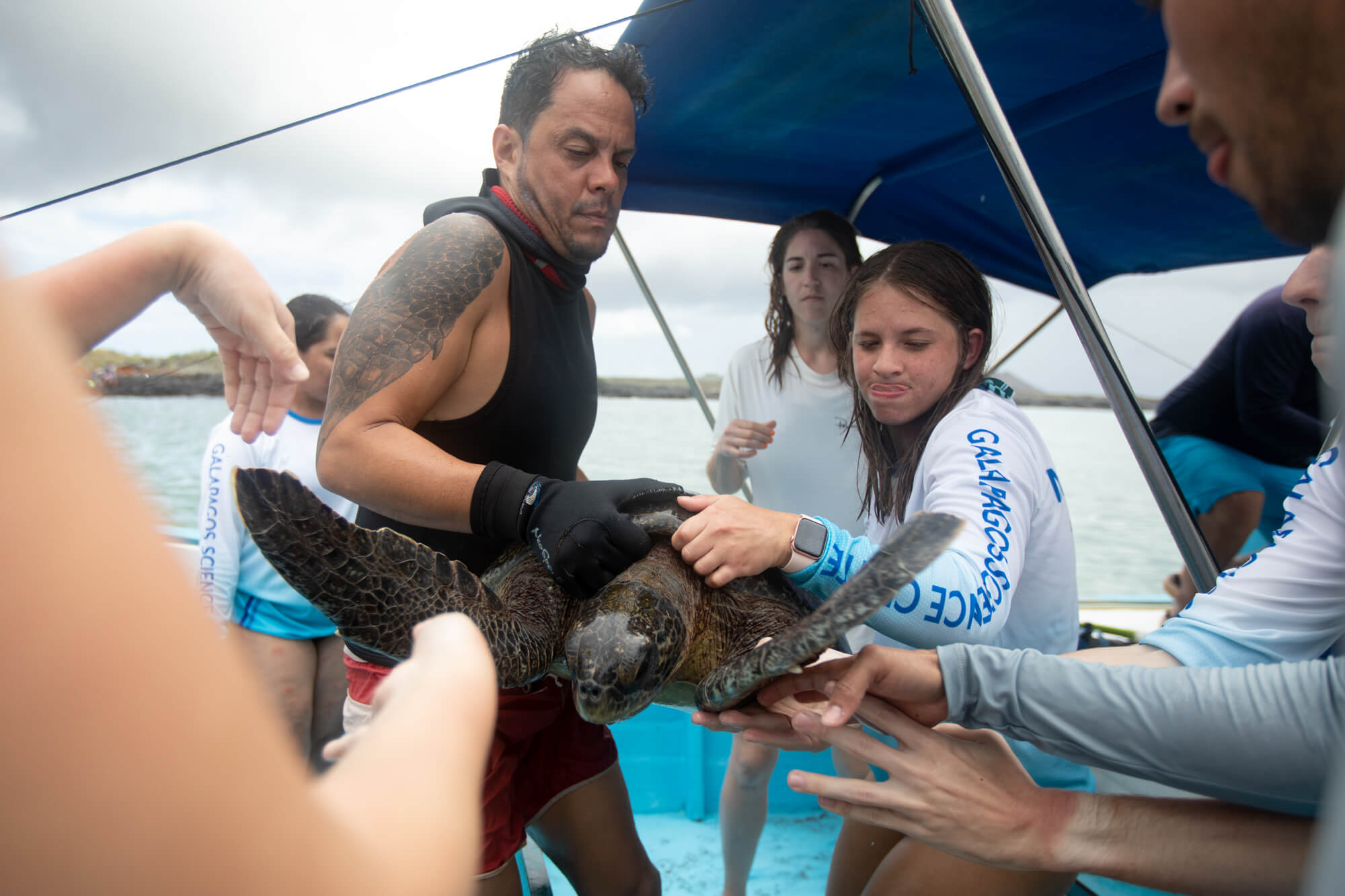
Students help Juan Pablo carry a particularly restless green sea turtle from one boat to the other before commencing the series of health assessments.

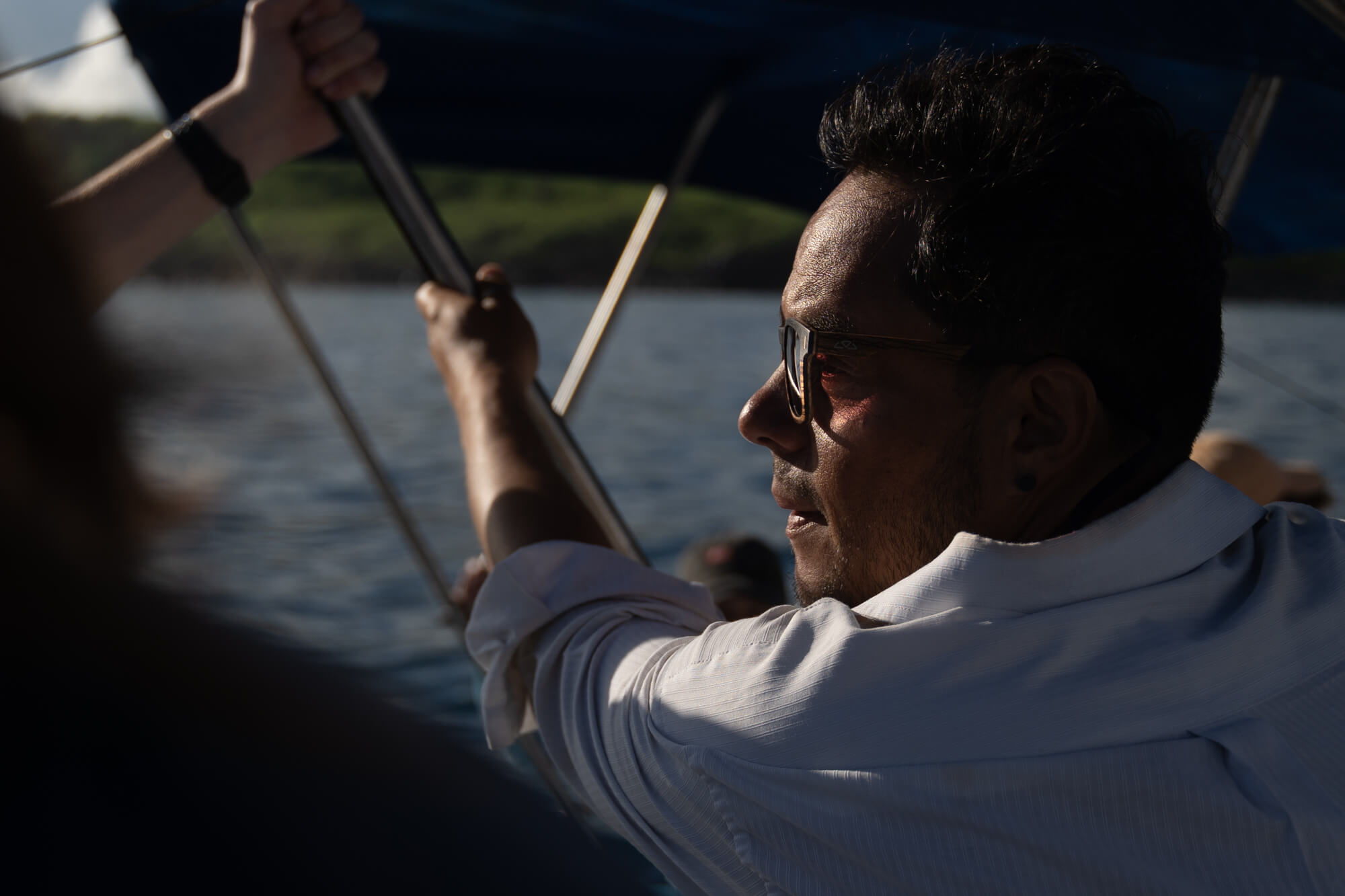
Juan Pablo gazes into the open ocean as the team is on their way to Puerto Tablas for a third day of sea turtle work on March 15, 2022. “These remote parts of the island are all so beautiful. But in the most isolated places in the Galápagos – no tourism, no fishing, no nothing – they are still full of trash. Absolutely full.”

Back to Main Story